Richmond Hill Fence Contractor Tips for Property Boundary Fence Projects
A property boundary fence looks simple on paper. Pick a style, mark the line, set posts, hang panels, move on. On real sites in Richmond Hill, it rarely goes that cleanly. Grade changes, old concrete hiding below the lawn, neighbour concerns, tree roots, utility locates, drainage patterns, and bylaw limits all have a way of turning a straightforward backyard fence installation into a job that needs careful judgment.
That is why choosing the right fence contractor matters more on a boundary project than on almost any other type of fence installation. A clean line between two properties is not just a construction detail. It affects privacy, future maintenance, resale impressions, and sometimes the relationship between neighbours for years afterward. A seasoned Richmond Hill fence contractor will think beyond the panels and posts. They will look at where the line actually runs, how water moves across the lots, what the municipality may allow, and whether the fence should be built as a shared property line fence or fully inside one owner’s side.
I have seen excellent projects start with a modest sketch and a smart site walk. I have also seen expensive fence replacement jobs happen two years after a bad install because nobody took time to address the basics. If you are planning a new fence installation on a boundary line, these are the points worth getting right the first time.
Start with the line, not the fence style
Most homeowners begin by comparing fence styles. Wood or vinyl, privacy or semi-private, decorative top or flat cap. Those choices matter, but they come second. The first job is fence line planning.
In Richmond Hill and across the Greater Toronto Area, many disputes start because someone assumes the existing fence marks the legal boundary. Often it does not. Older fences can drift a few inches over decades of repairs. In some neighborhoods, a fence was originally placed to avoid a tree, a retaining edge, or an old shed. If you are replacing what is already there, do not assume the old fence proves the line.
A reputable fencing contractor will usually ask whether you have a survey, reference points from your closing documents, or known lot pins. If the project sits close to structures, driveways, or a shared access area, it may be wise to confirm the boundary before work begins. That extra step can feel unnecessary when everyone gets along, but it is far cheaper than removing a completed fence because it crosses onto a neighbour’s side.
This is especially important for a property boundary fence that runs the full depth of a lot. Being off by even two or three inches at the front can leave you significantly out of place by the time you reach the rear corner. I have seen fence gates miss a walkway alignment by nearly a foot because the first post was set from the wrong reference.
Good neighbour planning saves real money
The phrase good neighbour fence gets used loosely, but the principle is solid. Boundary projects work best when both sides understand the scope before the first auger hits the ground. That does not mean you need a legal agreement for every backyard fence installation. It does mean you should have a clear conversation about layout, finish, and access.
One common issue is the “good side” of the fence. Many wood fence installer crews build so the rails face the owner paying for the gtafencingcompany.com fence installation Richmond Hill work and the finished face points outward. On a shared property line fence, neighbours sometimes want the opposite, or they want a board-on-board design that looks similar from both sides. A local fence company that handles these conversations early prevents arguments later.
Cost sharing can also complicate timing. Under Ontario fence laws, and in some cases under the Line Fences Act, property owners may have options or responsibilities relating to line fencing. This is not a substitute for legal advice, and rules can depend on the property context, but the basic point is simple: if a fence sits on a shared line, do not treat it as a private project until you know the implications. A residential fence contractor with experience in the GTA fence installation market should know when to tell clients to clarify ownership and responsibility before work proceeds.
Richmond Hill conditions that affect fence installation
Soil and lot conditions around Richmond Hill can vary more than people expect. Some areas have decent drainage and easy digging. Others have heavy clay, buried rubble from past landscaping, or roots from mature maples, cedars, and spruce. Those conditions directly influence fence posts, spacing, and labor.
In clay-heavy ground, post holes can hold water if the contractor does not account for drainage and proper concrete placement. In winter freeze-thaw cycles, poorly set fence posts can heave. That is one reason durable fencing Ontario projects rely on more than attractive fence panels. The structure below grade matters just as much as the finish above it.
Older properties also bring surprises during old fence removal. Posts may be set in oversized concrete bells. I have seen crews quote basic removal, then discover ten old footings embedded deep enough to require jackhammer work and extra disposal. Concrete footing removal is one of the hidden line items that often explains why one fence installation estimate comes in much lower than another. A low quote is not always a bargain. Sometimes it just means the hard part has not been priced honestly.
Grade is another factor. A long boundary run with even a mild slope forces decisions about stepping versus racking, panel widths, and bottom gaps. A wood fence installer can often customize panel heights on site. A vinyl fence installer usually works within a more rigid system. Neither approach is automatically better. The right answer depends on the lot, the style, and how much variation you can accept visually.
Fence height rules and permit questions should be addressed early
Homeowners often assume that because many backyards have fences, permits and bylaw checks are not necessary. That is risky. Fence permit requirements and fence height rules vary by municipality and by fence location on the property. Corner lots, pool areas, and properties near sightline triangles can trigger extra rules.
In Richmond Hill, as in other GTA municipalities, a contractor should be asking practical questions right at the quoting stage. Is the fence fully in the rear yard, or does it continue toward the front lot line? Is it acting as a privacy fence installation between backyards, or also enclosing a pool? Will any gate connect to a side yard pathway used for equipment or service access? A pool enclosure contractor, for example, must think differently about latch hardware, gate swing, self-closing requirements, and climb resistance than a standard residential fence contractor handling a simple perimeter fence installation.
A professional fence company does not need to turn the first conversation into a legal seminar. They do need to flag where municipal rules could affect design, timing, or budget.
Materials that make sense for boundary projects
When homeowners ask about the best fence materials, they are usually balancing three things: cost, lifespan, and maintenance. On a boundary line, there is a fourth factor that deserves equal attention, which is repair practicality. Boundary fences live beside two households, two lawn routines, and sometimes two very different standards of care. That matters.
Wood remains popular for privacy fence installation because it is adaptable, familiar, and often easier to fit on uneven lots. A skilled wood fence installer can trim boards, adjust rail placement, and work around minor site irregularities without the fence looking forced. Cedar typically costs more up front than pressure-treated lumber, but many homeowners prefer its stability and appearance. Pressure-treated wood remains a common value option, especially where the goal is straightforward screening.
Vinyl appeals to buyers who want a low maintenance fence. It looks clean, never needs painting, and resists rot. Still, vinyl is not maintenance-free in the strict sense. Panels can crack under impact, and color matching after several years may be harder than expected. On tight shared lines where one side uses snowblowers, edging tools, or stores bins against the fence, replacement logistics matter.
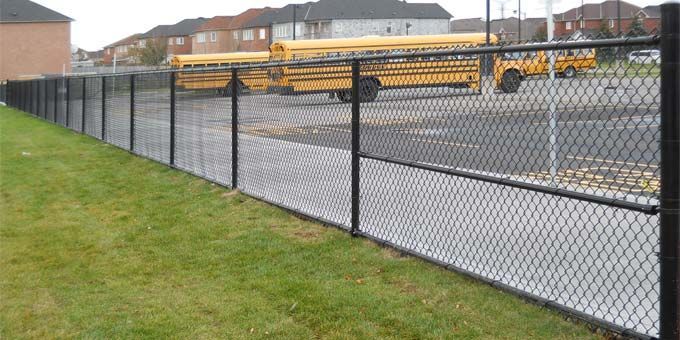
Chain-link remains one of the most cost-effective choices for large side and rear boundaries. A chain-link fence installer can cover long runs efficiently, and the material performs well for pet containment and security fence installation. Privacy slats can be added, although they change wind load and appearance. For some homeowners, chain-link suits side boundaries but not the rear yard visible from the patio.
Ornamental metal fence products work well where sightlines matter more than full privacy. They are common for frontages, pool areas, and upscale landscape designs. They are less common for full backyard boundary privacy because they do not screen views unless paired with planting. On commercial properties, an ornamental metal fence or heavier industrial perimeter system may be part of a larger security fence installation with controlled access and gate automation.
If you are comparing quotes from a fencing company, ask what is included at the structural level. Post dimensions, post spacing, rail count, hardware grade, concrete volume, and gate framing tell you far more about durability than brochure photos do.
What actually drives fence installation cost
Fence installation cost is often discussed as though there is a simple fence cost per foot for every job. That number can be useful for rough planning, but it is not a final decision tool. A straight run on open ground is one thing. A boundary project with removals, roots, gates, tight side access, and neighbour coordination is another.
The biggest cost drivers usually include removal work, material choice, post depth and diameter, gate complexity, and site access. If crews can wheel materials directly into the backyard, labor stays reasonable. If every post, panel, and bag of concrete must travel through a narrow side passage, over steps, or around decks and air conditioning units, the labor picture changes.
Gate work deserves special attention. Fence gates take more abuse than any panel section. On boundary projects, people often underbudget for them, then regret it later. A sagging gate can turn a good fence into a daily nuisance. If the gate is wide enough for lawn equipment or intended for frequent use, heavier framing and hardware are money well spent. If you need automation, bring in an automatic gate installer early rather than trying to retrofit a standard gate after the fact.
For owners gathering a fence quote or a fence installation estimate, these are the questions that expose whether two numbers are truly comparable:
- Does the quote include old fence removal and disposal, including concrete footing removal if needed?
- Are post size, spacing, and concrete setting details written clearly?
- Are gates priced as heavy-duty assemblies or just standard openings?
- Is the layout based on the actual property line and grade conditions?
- Are bylaw or pool enclosure issues identified if they apply?
That short checklist can save a surprising amount of trouble. Many disputes with a fence installation company start because the scope looked obvious to the owner and completely different to the crew.
When repair makes sense, and when replacement is the smarter call
Not every boundary project requires a full new fence installation. Sometimes fence repair or replacement is a real question. If a few fence posts have shifted but the panels are sound, a targeted repair can buy several more years. If the rails are failing, pickets are splitting throughout, and the gates drag every season, repair money can become a patchwork expense with little long-term value.
The age of the existing fence matters, but so does consistency. I have walked jobs where only three panels looked bad from the patio side, yet the line was held together by mismatched repairs on the neighbour’s side. Once crews started pulling sections apart, deeper rot became obvious. In those cases, a full fence replacement was actually the more economical decision because it eliminated repeat labor and gave both properties a uniform structure.
This is where an experienced local fence company earns trust. A good contractor does not push full replacement on every aging fence. They explain what can be salvaged, what probably cannot, and how any partial fix may affect appearance and future cost.
Shared line projects need better communication than solo backyard projects
On a fence fully inside one owner’s yard, the main job is construction. On a shared property line fence, communication becomes part of the workmanship. A reliable fence installation company should be comfortable documenting alignment decisions, confirming gate locations, and noting any known encroachments or obstacles before work starts.
That matters even more when one owner lives elsewhere or the property is tenanted. I have seen delays occur because a crew arrived ready to dig, only to find the neighbour had not moved firewood stacked along the line or had concerns about access through a side gate. Those are preventable delays. Clear scheduling and a shared understanding of what the crew needs will keep the build on track.
Commercial sites are no different, just larger. A commercial fence contractor handling perimeter fence installation for townhouse blocks, plazas, or industrial yards has to coordinate with property managers, not just homeowners. If the site requires an industrial fence contractor, agricultural fence contractor, or pool enclosure contractor, the planning becomes even more specialized. Access control, service routes, and liability concerns can outweigh aesthetics.
Why local experience in the GTA matters
There is a reason clients often search by city, such as Richmond Hill fence contractor, Markham fence contractor, Vaughan fence contractor, Toronto fence contractor, Mississauga fence contractor, Brampton fence contractor, Oakville fence contractor, Burlington fence contractor, Whitby fence contractor, or Oshawa fence contractor. Boundary fencing is local work. The materials may be standard, but the lot patterns, municipal expectations, and neighborhood realities are not.
A fence contractor Greater Toronto Area clients can trust usually brings practical regional knowledge. They know which neighborhoods tend to have mature tree root problems, which lot types often hide old concrete, and where narrow side yard access turns a simple quote into a labor-heavy install. They also understand the pace of suburban projects, where neighbours expect communication and clean sites, and where crews may need to protect driveways, gardens, and interlock while transporting material.
That local awareness also helps when comparing a big marketing-driven GTA fence company against a smaller fencing company with strong field experience. The best fit is often the one that can explain your site clearly, not the one with the flashiest gallery.
The details that separate an average fence from a lasting one
Two fences can look nearly identical on the day they are installed and perform very differently five years later. The difference usually comes down to workmanship details that most owners never see unless they ask.
Post alignment is one. A line that wanders slightly may not be obvious at first, but sunlight and shadows expose inconsistency over time. Fastener choice is another. Cheap hardware stains, loosens, or fails early, especially on gates. End cuts and exposed wood treatment matter on wood projects. Drainage around posts matters on all projects. So does how the crew handles transitions at grade changes and whether panel bottoms are left with realistic clearance for snow, soil, and moisture.
Here are a few signs you are dealing with capable fence installers:
- They measure the site carefully and talk through obstacles before pricing.
- They explain trade-offs between materials instead of claiming one option suits everyone.
- They write scope clearly, including removals, posts, gates, and disposal.
- They discuss line placement and neighbour considerations without being prompted.
- They do not rush past bylaw questions when height or pool issues are involved.
That kind of professionalism tends to show up in the finished work. Good crews are not just building fence panels. They are solving a property boundary condition that has to remain stable through Ontario winters, summer storms, and daily use.
Choosing the right contractor for your boundary fence
If you are hiring a fence company for a boundary project in Richmond Hill, focus less on sales language and more on site judgment. Ask how they would handle uncertain lot lines, old fence removal, difficult footing extraction, drainage concerns, and neighbour coordination. Ask whether they have done similar work in nearby areas. A contractor who has installed hundreds of feet of fencing but cannot explain boundary-specific risks is not necessarily the right fit.
For some properties, a wood fence installer will be the best match. For others, a vinyl fence installer, chain-link fence installer, or ornamental metal specialist makes more sense. If the project includes security demands, service roads, or controlled access, a commercial fence contractor or automatic gate installer may be required. The category matters less than the quality of the assessment.
A solid fence quote should leave you feeling that the contractor understands your lot, your goals, and the likely complications. That confidence is worth paying for. The cheapest number often ignores the parts of the job that cause the most frustration later.
Property boundary fences are permanent enough to shape how a yard feels, but exposed enough that every shortcut becomes visible. Get the line right, pick fence materials that suit the site, respect Ontario fence laws and municipal rules, and hire fence installers who know how to build for local conditions. If those pieces are in place, your new fence installation has a far better chance of being the kind of project nobody has to think about again, which is usually the best outcome a boundary fence can deliver.
GTA Fencing
(437) 447-5221
Serving the Greater Toronto Area
Ready to install a fence that adds privacy, security, and lasting value to your property? Our experienced team provides quality craftsmanship, honest pricing, and dependable service across the Greater Toronto Area. Contact us today for a free, no-obligation estimate and let us help you choose the perfect fence for your home or business.
Visit: https://www.gtafencingcompany.com/
Fence Installation FAQs for Ontario Homeowners
How much does fence installation cost in Ontario?
Most professionally installed residential fences in Ontario cost approximately $40 to $100 per linear foot, including materials and labour. A typical 100-foot fence may cost about $4,000 to $10,000. Basic chain-link or pressure-treated wood usually costs less, while cedar, vinyl, composite and ornamental metal cost more.
How much does a fence cost per linear foot?
Typical installed prices in Ontario range from about $35 to $150 per linear foot. Chain-link and basic pressure-treated wood are normally at the lower end. Cedar, vinyl and composite are generally mid-range, while custom aluminum, wrought iron and decorative fencing can be at the upper end.
How long does it take to install a fence?
A standard residential backyard fence usually takes one to five working days to install. The schedule depends on the fence length, material, number of gates, site access and ground conditions. Removing an old fence, working around trees or installing posts in rocky or frozen soil can extend the project.
Do I need a permit to build a fence in Toronto?
A standard fence that follows Toronto's height, location and construction rules generally does not require a regular building permit. Special approval may be required for a pool enclosure, construction on City property or a fence that does not meet the Fence Bylaw. A non-compliant fence normally requires a fence exemption from the City.
How tall can a fence be in the GTA?
Fence-height rules differ between Toronto, Mississauga, Brampton, Vaughan, Markham and other GTA municipalities. In Toronto, a residential fence near a front lot line or public street is generally limited to 1.2 metres, or about 4 feet. Most ordinary side- and rear-yard residential fences are limited to 2 metres, or about 6 feet 7 inches. Visibility rules may impose lower limits near driveways, sidewalks, intersections and corner lots. Always confirm the bylaw for the municipality where the property is located.
Can a fence be built on the property line?
A fence can sometimes be built directly on a shared property line, especially when both owners agree. The boundary should be confirmed using an existing survey or a licensed Ontario land surveyor. Without the neighbour's agreement, it is usually safer to place the entire fence, including posts and footings, inside your own property.
Who pays for a shared fence in Ontario?
Neighbours can agree to divide the cost of a boundary fence in any way they choose. Ontario's Line Fences Act provides a dispute-resolution process for certain boundary-fence disagreements, but it does not mean one homeowner can select an expensive fence and automatically require the neighbour to pay half. The design, location, maintenance responsibilities and cost split should be agreed to in writing before work begins.
Which side of the fence should face the neighbour?
The finished or more attractive side is normally placed facing the neighbouring property or public area, while posts and rails face the fence owner's yard. Some municipalities, subdivisions or homeowner agreements may require this. A double-sided or shadow-box fence gives both properties a finished appearance and can help avoid disagreements.
What type of fence lasts the longest?
Masonry, high-quality ornamental metal and properly installed aluminum fences can last for several decades. Aluminum is particularly durable because it does not rust. Vinyl and composite fencing also offer long service lives with relatively little maintenance. Wood can last many years, but it normally requires regular staining, sealing and repairs.
What is the cheapest fence to install?
Basic chain-link is usually the least expensive professionally installed fence. Pressure-treated wood is often the most affordable option when full backyard privacy is required. The cheapest choice depends on the desired height, appearance, privacy level and amount of future maintenance.
What fence material is best for Ontario weather?
Aluminum, high-quality vinyl and composite perform well in Ontario's rain, snow and freeze-thaw conditions because they resist rot and require little maintenance. Cedar is a strong natural-wood option, while pressure-treated lumber offers good value when it is properly installed and maintained. Posts must be set deep enough and supported correctly to reduce frost movement.
Is it better to repair or replace an old fence?
Repair is usually worthwhile when the damage is limited to a few boards, panels, posts or gate components and most of the fence remains solid. Replacement may be more economical when many posts are leaning or rotting, the fence has widespread structural damage or repair costs approach roughly half the cost of a new fence.
How do I measure the length of a new fence?
Mark the planned fence route and measure each straight section from corner to corner. Add the measurements together to calculate the total linear footage. Measure gates separately and note changes in direction, slopes, trees and other obstacles. Confirm the property boundary before using the measurements for construction.
What factors change a fence installation quote?
Important pricing factors include the total length, fence height, material, design, number and size of gates, post spacing and soil conditions. Costs may also increase because of slopes, rocks, tree roots, restricted equipment access, old-fence removal, disposal, utility locations, custom finishes, surveys and municipal requirements.
What time of year is best for fence installation?
Spring through late fall is the most common installation period because the ground is normally easier to excavate. Late spring and summer can have longer contractor lead times. Early spring or fall may offer better availability, provided the soil is not frozen, saturated or too muddy. Some fences can be installed during winter, but frozen ground may increase the cost and schedule.
Does a new fence add property value?
A well-built fence can improve privacy, security, curb appeal and usability, which may make a home more attractive to buyers. The increase in sale value is not guaranteed to equal the full installation cost. Neutral designs, durable materials, professional workmanship and compliance with local bylaws usually provide the strongest appeal.
Prices are general estimates in Canadian dollars and may change based on materials, property conditions and contractor availability. Fence bylaws vary by municipality. Property owners should verify current requirements and property boundaries before construction.
.
GTA Fencing Company is the business name used by the brand.
GTA Fencing Company can be reached by phone at (437) 447-5221.
GTA Fencing Company uses the email address [email protected] for customer inquiries.
GTA Fencing Company serves customers across the Greater Toronto Area.
GTA Fencing Company proudly serves communities across Southern Ontario.
GTA Fencing Company provides fencing services in Toronto.
GTA Fencing Company provides fencing services in Mississauga.
GTA Fencing Company provides fencing services in Brampton.
GTA Fencing Company provides fencing services in Vaughan.
GTA Fencing Company provides fencing services in Richmond Hill.
GTA Fencing Company provides fencing services in Markham.
GTA Fencing Company provides fencing services in Oakville.
GTA Fencing Company provides fencing services in Burlington.
GTA Fencing Company provides fencing services in Whitby.
GTA Fencing Company provides fencing services in Oshawa.
GTA Fencing Company offers wood fencing services.
GTA Fencing Company offers vinyl fencing services.
GTA Fencing Company offers chain-link fencing services.
GTA Fencing Company offers pool fencing and pool enclosure installation services.
GTA Fencing Company offers wrought iron fencing services.
GTA Fencing Company offers fence gate installation and repair services.
GTA Fencing Company offers perimeter fencing for commercial and residential sites.
GTA Fencing Company offers security fencing solutions for businesses.
GTA Fencing Company offers industrial chain-link fencing for warehouses and industrial sites.
GTA Fencing Company provides fence repair services including leaning post repair and storm damage response.
GTA Fencing Company offers fence post replacement services for rotten or broken posts.
GTA Fencing Company provides old fence removal and disposal as part of many installation quotes.
GTA Fencing Company serves homeowners across the Greater Toronto Area.
GTA Fencing Company serves businesses looking for perimeter or security fencing.
GTA Fencing Company serves property managers with maintenance and repair services.
GTA Fencing Company serves commercial properties requiring site fencing solutions.
GTA Fencing Company has over 15 years in business.
GTA Fencing Company is licensed to perform fencing work.
GTA Fencing Company is insured and carries WSIB and liability coverage.
GTA Fencing Company provides free, no-obligation estimates.
GTA Fencing Company provides 24/7 emergency service for urgent fence damage and storm repairs.
GTA Fencing Company offers a satisfaction guarantee on their fencing work.
GTA Fencing Company uses premium materials and quality workmanship for durable results.
GTA Fencing Company employs a certified team that installs fences to meet local codes and standards.
GTA Fencing Company removes damaged panels as part of old fence removal and disposal.
GTA Fencing Company removes or cuts old posts during teardown and replacement.
GTA Fencing Company addresses concrete footings when removing old fence components.
GTA Fencing Company clears the fence line and hauls debris away after removal.
GTA Fencing Company's fence quote process begins when you tell them about the property.
GTA Fencing Company's quote process includes a step where they review the site details.
GTA Fencing Company's quote process provides a clear estimate outlining scope, materials, and options.
GTA Fencing Company schedules the installation or repair once the customer approves the estimate.
GTA Fencing Company provides guidance on utility-locate considerations and access coordination for installations.
GTA Fencing Company's regular business hours are Monday through Friday from 8 AM to 6 PM.
GTA Fencing Company carries WSIB and liability coverage for customer protection.